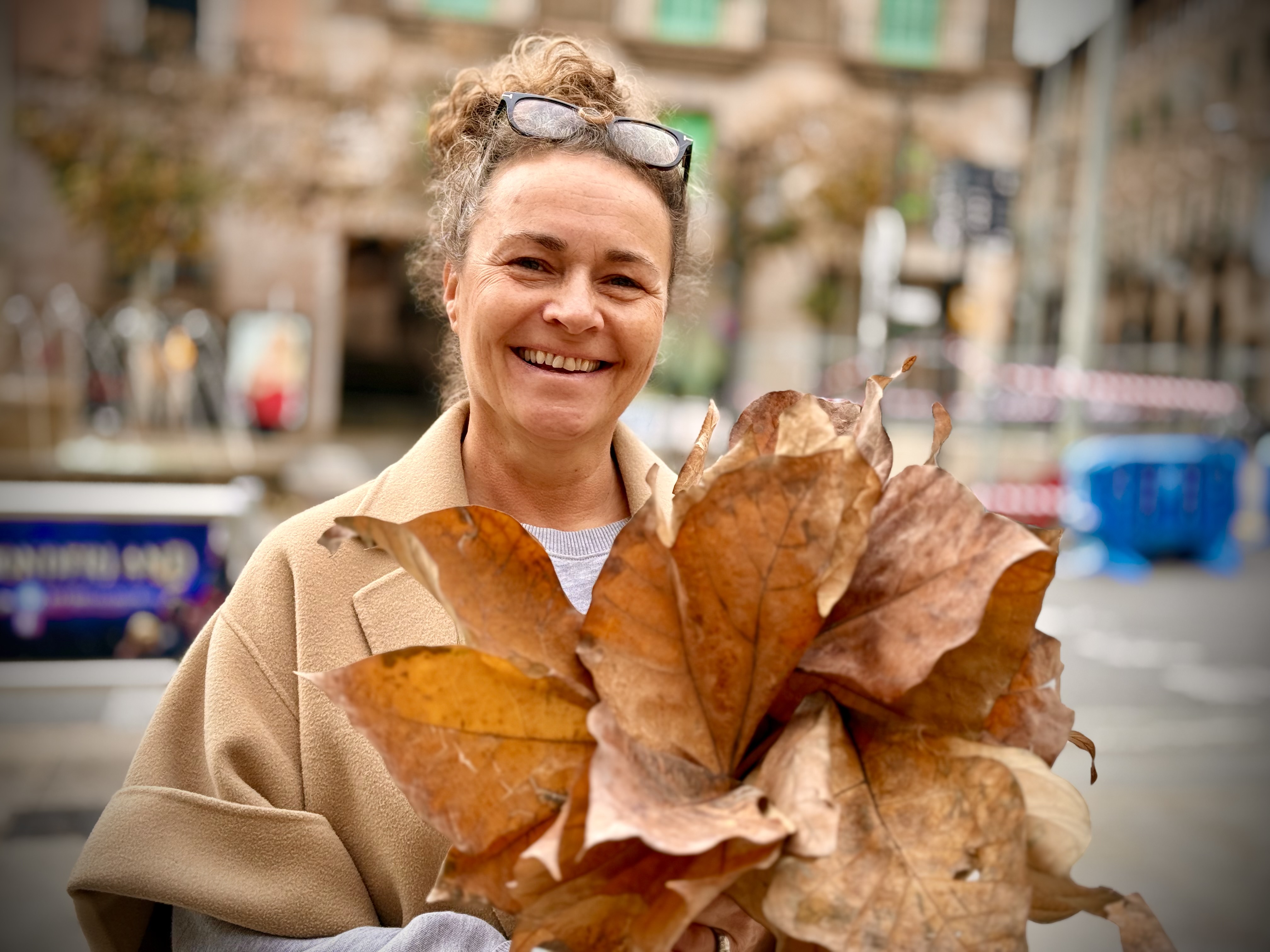
The first cold snap loosens them. For a few days in late autumn the old town is ankle-deep in leaves the size of dinner plates, the plane trees letting go of a whole summer at once. Most people walk over them. I can't.
I started gathering them years ago, almost without deciding to — a few on the way back from the market, pressed flat under a book by the time I got home. Now it is a small ritual. I choose the ones the city has already half-finished: edges curled to copper, the veins gone dark, a brittleness that catches the afternoon light differently than anything I can buy.
At home they ask for almost nothing. A wide ceramic bowl on the table. A bare branch in a tall jug by the window, no water, just shape and shadow. A single enormous leaf laid flat on a stack of books, the way I might leave out a beautiful stone. They dry further over the weeks, shifting from amber to a deep tobacco brown, and the room changes with them.
There is a particular honesty to decorating with things already on their way out. No pretending it is spring. The flowers I usually reach for are about abundance; this is about the turn — the island exhaling, getting quieter, pulling the light lower across the floor. It suits these old stone houses, which have always known how to hold a season.
So before the street sweepers come, I go out with empty arms. Palma drops something extraordinary every November, and it is free, and it lasts until I am ready to let it go too.
Practical information
- Neighborhood
- Old Town · Centre Històric